
Disclosure: This post contains affiliate links. If you purchase through our links, we may earn a small commission at no extra cost to you.
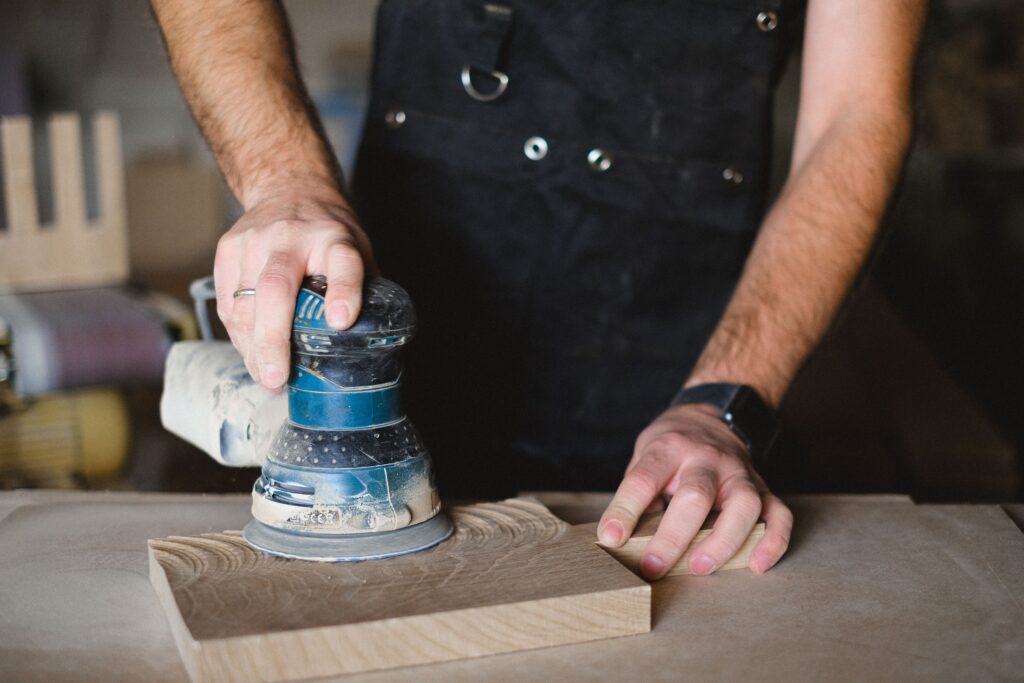
Sanding is the step most DIYers rush — and it’s exactly why painted furniture looks amateur, refinished floors show swirl marks, and woodworking projects feel homemade rather than handmade. A random orbit sander removes material faster than hand sanding, leaves fewer visible scratches than a belt sander, and handles the finishing work that determines whether a project looks good or looks great.
The “random orbit” part matters: the pad moves in small random ellipses rather than simple circles, which prevents the circular scratch patterns that orbital sanders leave and that show through paint and stain. For homeowners refinishing furniture, prepping surfaces for paint, or doing any finish woodworking, it’s the right tool.
What to Look for in a Random Orbit Sander
Pad size: 5-inch is the standard for home use — wide enough to cover area efficiently, small enough to maneuver around curves and into tighter spaces. 6-inch pads remove material faster on large flat surfaces but are harder to control near edges.
Orbits per minute (OPM): Higher OPM removes material faster. Variable speed lets you slow down for fine finishing work and speed up for aggressive material removal — more useful than a single fixed speed.
Dust collection: Random orbit sanders produce significant fine dust. A built-in dust bag catches most of it; a dust port that connects to a shop vacuum catches more. For indoor work, dust collection matters both for visibility during sanding and for cleanup afterward.
Pad attachment: Hook-and-loop (velcro-style) disc attachment is standard and lets you change grits quickly without tools. Make sure replacement discs are widely available for whatever model you choose.
Vibration and comfort: Extended sanding sessions — refinishing a table, prepping a floor section — mean the sander’s vibration transfers to your hand for 20-30 minutes at a time. Better sanders have vibration dampening that makes extended use significantly more comfortable.
The Best Random Orbit Sanders on Amazon
1. DEWALT 5-Inch Random Orbit Sander — Best Overall
Category: Power Tools | Price range: $50-70
DeWalt’s standard 5-inch random orbit sander earns its reputation through consistency — the pad stays flat and true under pressure rather than tilting at the edges, which is what causes uneven sanding and visible marks on finished surfaces. The dust collection system uses a sealed design that captures fine particles effectively rather than simply redirecting them.
The rubber overmold grip reduces vibration transfer noticeably compared to hard-body alternatives, and the variable speed dial (8,000-12,000 OPM) covers everything from aggressive material removal to final finish passes before applying stain or paint. Hook-and-loop disc attachment means grit changes take seconds.
Best for: Furniture refinishing, paint prep, general woodworking, anyone who wants reliable consistent results
Search on Amazon →
2. Makita 5-Inch Random Orbit Sander — Best for Low Vibration
Category: Power Tools | Price range: $55-75
Makita’s random orbit sander is consistently praised for one specific quality: lower vibration than competitors at the same price point. The counterbalance mechanism reduces the hand fatigue that comes from extended sanding sessions — relevant when you’re refinishing a dining table or prepping a large surface for paint.
The pad brake stops the disc within seconds of releasing the trigger, which prevents the circular marks that appear when a spinning pad touches down or lifts off the surface. Variable speed runs from 4,000 to 12,000 OPM — the lower end of that range is genuinely useful for fine finishing passes on delicate surfaces.
Best for: Extended sanding sessions, anyone sensitive to vibration, fine finish work
Search on Amazon →
3. SKIL 5-Inch Random Orbit Sander — Best Budget Pick
Category: Power Tools | Price range: $30-45
SKIL’s budget random orbit sander delivers the core functionality — random orbit action, hook-and-loop disc attachment, dust collection — at a price that makes it an easy first purchase. The single speed (12,000 OPM) is adequate for most home sanding tasks, and the dust bag captures enough material to keep visibility clear during work.
Where it falls short of the DeWalt or Makita is in vibration dampening and dust collection efficiency — both noticeable during extended use. For occasional projects — refinishing a single piece of furniture, prepping a door for paint — neither limitation is practically significant.
Best for: Occasional home sanding, first sander purchase, budget-conscious buyers
Search on Amazon →
4. Ryobi ONE+ 18V Cordless Random Orbit Sander — Best Cordless
Category: Power Tools | Price range: $40-60 (tool only)
For Ryobi ONE+ battery owners, the cordless random orbit sander eliminates the cord management that makes sanding furniture and awkwardly positioned surfaces more complicated than it needs to be. The 18V battery delivers consistent speed throughout the charge, and the random orbit action matches corded alternatives for finish quality.
The tradeoff versus corded models is runtime — a standard battery gives roughly 30-45 minutes of continuous sanding, which covers most single-project sessions but requires a spare battery for longer work. For Ryobi platform owners, the convenience outweighs the runtime consideration for typical home use.
Best for: Ryobi ONE+ battery owners, furniture refinishing, sanding in areas without convenient power access
Search on Amazon →
5. Festool ETS EC 150 — Best for Serious Finish Work
Category: Power Tools | Price range: $350-400
Festool’s random orbit sander is in a different category from everything else on this list — it’s what professional furniture makers, cabinet finishers, and woodworkers use when the surface finish is the entire point of the project. The dust extraction is genuinely exceptional, the pad stays perfectly flat under any pressure, and the variable speed range covers finishing passes that would damage a surface with a standard sander running at full speed.
It’s significantly more expensive than any other option here. For a homeowner doing occasional projects, it’s overkill. For someone who regularly refinishes furniture, builds cabinetry, or does finish woodworking where surface quality determines the result, the investment pays for itself in consistently better outcomes.
Best for: Serious woodworking, cabinet finishing, anyone for whom surface quality is the priority
Search on Amazon →
Quick Comparison
| Model | Speed | Cordless | Variable Speed | Dust Collection | Price Range |
|---|---|---|---|---|---|
| DEWALT 5-Inch | 8K-12K OPM | ❌ | ✅ | ✅ | $50-70 |
| Makita 5-Inch | 4K-12K OPM | ❌ | ✅ | ✅ | $55-75 |
| SKIL 5-Inch | 12K OPM | ❌ | ❌ | ✅ | $30-45 |
| Ryobi ONE+ 18V | Variable | ✅ | ✅ | ✅ | $40-60 |
| Festool ETS EC 150 | 6K-10K OPM | ❌ | ✅ | ✅✅ | $350-400 |
Which One Should You Buy?
For most people: DEWALT 5-Inch. Reliable, effective dust collection, comfortable grip — covers all standard home sanding tasks without compromise.
For extended sessions: Makita. The lower vibration makes a real difference during 30+ minutes of continuous sanding.
On a budget: SKIL. For occasional use it gets the job done without unnecessary expense.
Ryobi platform owners: Ryobi ONE+. No cord, no new charger, no second thoughts.
For serious finish work: Festool ETS EC 150. If surface quality is the entire point of the project, nothing else on this list comes close.
Frequently Asked Questions
What grit sandpaper should I start with?
Start with the coarsest grit needed to remove the existing finish or imperfection — typically 80 grit for stripping paint or heavy material removal, 120 grit for general surface prep, 180-220 grit for final passes before applying finish. Always work through grits progressively rather than jumping from 80 to 220 — each grit removes the scratches left by the previous one.
Can a random orbit sander remove paint?
Yes, with coarser grits (60-80), a random orbit sander removes paint effectively. It’s slower than a belt sander or heat gun for large areas but leaves a more even surface and is easier to control near edges without damaging the substrate.
How do I avoid swirl marks with a random orbit sander?
Let the sander do the work — don’t press hard or move it too quickly. Keep the pad flat against the surface rather than tilting it. Finish with a final pass using fine grit (180-220) moving with the wood grain. Most visible swirl marks come from lifting the sander while it’s still spinning — engage the pad brake or let it fully stop before lifting.
How often should I change sanding discs?
More often than feels necessary. A dull disc cuts more slowly, requires more pressure, and leaves worse results than a fresh disc. For furniture refinishing, expect to use several discs per project — discs are inexpensive relative to the time saved by always cutting with a sharp abrasive.
Can I use a random orbit sander on drywall?
Yes, but use a fine grit (120-150) and keep the sander moving constantly — drywall compound is soft and a stationary sander creates depressions quickly. Connect to a shop vacuum rather than using the dust bag, as drywall dust is extremely fine and clogs standard bags fast.
Last updated: July 2026. Prices and availability may vary on Amazon.
Also read: Best Circular Saws for Beginners, Best Drywall Tools for DIY