
Disclosure: This post contains affiliate links. If you purchase through our links, we may earn a small commission at no extra cost to you.
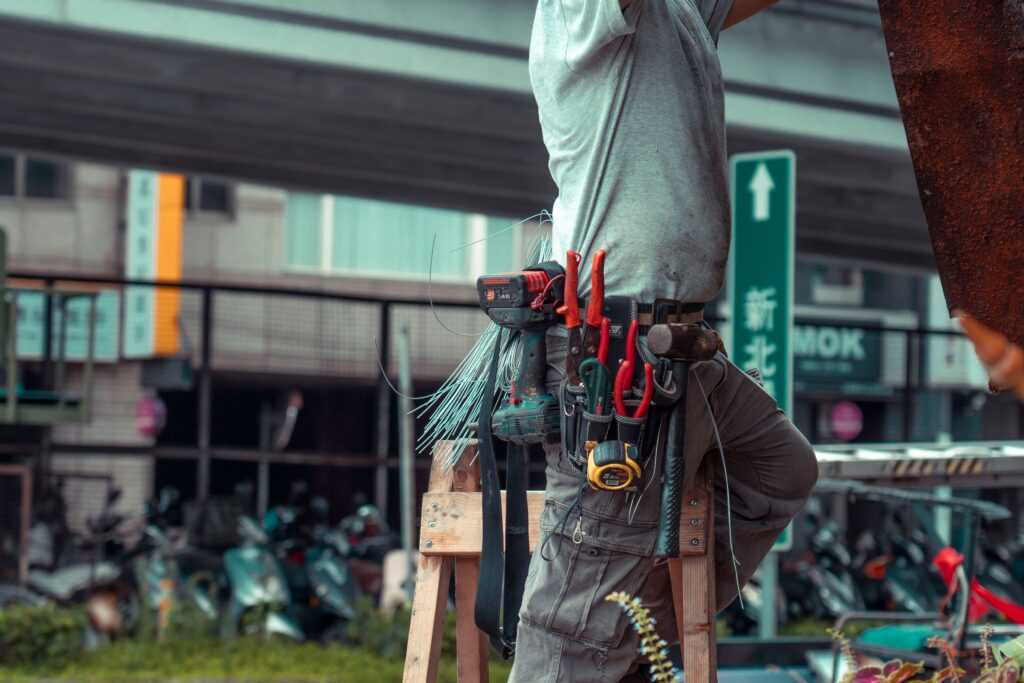
If you’ve ever climbed a ladder three times for the same screwdriver, or set your drill down somewhere and spent five minutes finding it, a tool belt solves a problem you didn’t know had a name. It’s not a professional contractor accessory — it’s a practical upgrade for anyone who does their own home repairs, painting, assembly, or renovation work.
The right tool belt keeps everything within reach, reduces fatigue from carrying tools by hand, and genuinely speeds up every project. The wrong one digs into your hip, drops tools at inconvenient moments, and ends up in the back of a drawer after two uses.
Here’s what actually works.
What to Look for in a Tool Belt
Fit and weight distribution: A tool belt loaded with tools can weigh 10-15 lbs. How that weight sits on your hips and lower back determines whether you can wear it for two hours or twenty minutes. Wide padded belts distribute weight significantly better than thin ones.
Pocket layout: Think about what you actually carry. A drill, a hammer, a level, screwdrivers, screws, a tape measure. The pockets need to match your real workflow — not just look impressive in a product photo.
Material: Leather lasts longest but is heavy and stiff when new. Nylon and polyester are lighter, dry faster, and require no break-in period. For homeowners who use a tool belt occasionally, nylon is the better choice.
Suspension system: Some tool belts are standalone — just a belt with pouches. Others use a separate padded support belt underneath. The suspension system matters a lot for comfort under load.
Adjustability: You’ll often wear a tool belt over different clothing — a t-shirt in summer, a jacket in winter. A wide adjustment range is more useful than it sounds.
The 5 Best Tool Belts on Amazon
1. DeWalt DG5120 Pro Framer’s Combo — Best Overall
Category: Garage & Workshop | Price: ~$45
DeWalt built the DG5120 around a simple insight: most tool belts have too many small pockets and not enough large ones. The Pro Framer’s Combo has two large main pouches that fit a drill, a framing hammer, or a full handful of fasteners without forcing you to cram things in. The side pockets handle screwdrivers, a utility knife, and a tape measure without the pocket stretching out of shape.
The material is heavy-duty polyester with metal-reinforced tool holders — the kind that doesn’t tear after the third time you shove a hammer in at an angle. The padded back support reduces lower back strain noticeably when the belt is fully loaded, and the adjustment range covers waist sizes 29 to 46 inches.
It’s the tool belt that feels like it was designed by someone who actually uses one, not just looks at them.
Best for: Homeowners doing serious DIY work, anyone spending more than an hour at a time on a project Check price on Amazon →
2. CLC Custom Leathercraft 1608 — Best for Comfort
Category: Garage & Workshop | Price: ~$38
CLC has been making tool belts and pouches for decades and the 1608 is their comfort-focused answer to the problem of tool belts that hurt after an hour. The suspension system uses a separate padded support belt that sits against your hips, with the tool pouches mounted on top — the load transfers to your hips rather than hanging from your waist.
The pouches are fabric-lined, which protects tool finishes and reduces rattling. There are 19 pockets in total, well-organized between hammer loops, screwdriver slots, a tape measure clip, and two main pouches. The material is ballistic nylon — genuinely tough and fast-drying if you’re working in damp conditions.
For anyone who finds standard tool belts uncomfortable after extended wear, the CLC suspension system makes a real difference.
Best for: Extended wear, homeowners with lower back sensitivity, multi-hour projects Check price on Amazon →
3. Bucket Boss 60013 DuckWear — Best Budget Pick
Category: Garage & Workshop | Price: ~$22
The Bucket Boss is made from duck canvas — a tightly woven cotton fabric that’s surprisingly tough for its weight and cost. It’s lighter than polyester tool belts, comfortable against the body, and the material softens and conforms slightly with use rather than staying stiff.
The layout is straightforward: two main pouches, a hammer loop, and several smaller pockets for screwdrivers and a tape measure. It won’t carry as much as the DeWalt or CLC, but for light-to-medium home projects — hanging drywall, assembling furniture, basic repairs — it handles everything without the cost or complexity of a premium belt.
The adjustment range is wide and the hardware is metal rather than plastic, which matters for longevity on a budget product.
Best for: Occasional home projects, anyone trying a tool belt for the first time, light repair work Check price on Amazon →
4. Occidental Leather 9855 — Best Premium Option
Category: Garage & Workshop | Price: ~$120
Occidental Leather makes tool belts the way good boots are made — with full-grain leather, hand-finished edges, and hardware that outlasts the person wearing it. The 9855 is their homeowner-oriented model and it’s built to the same standard as their contractor rigs.
The leather is stiff when new and requires a break-in period of several uses before it conforms to your body. After that, it fits better than any nylon alternative ever will. The pockets are deep and reinforced at the stress points, the hammer loop is positioned correctly for natural draw, and the belt will still be in use in twenty years if you treat it reasonably.
It’s significantly more expensive than everything else on this list. For someone who does serious home renovation work and wants to buy once rather than replace every few years, the investment makes sense.
Best for: Serious DIYers, homeowners doing major renovations, anyone who wants a tool belt that lasts a lifetime Check price on Amazon →
5. MELOTOUGH Tool Belt Bag — Best for Versatility
Category: Garage & Workshop | Price: ~$35
The MELOTOUGH takes a different approach — instead of a traditional two-pouch setup, it uses a single large bag mounted on a belt that opens wide for easy access. Think of it as a portable toolbox you wear rather than a traditional tool belt.
The main compartment fits a cordless drill, a level, and a handful of accessories without crowding. The exterior pockets handle the smaller items — screwdrivers, a utility knife, a tape measure. The belt is padded and the bag sits against the hip rather than hanging, which keeps the weight centered.
It’s particularly useful for tasks that involve carrying a lot of different small items — electrical work, plumbing repairs, or any project where you need many tools accessible at once rather than just a hammer and a drill.
Best for: Electrical and plumbing DIY work, anyone who carries many small tools, homeowners who want one bag for everything Check price on Amazon →
Quick Comparison
| Model | Material | Pockets | Padded Support | Price |
|---|---|---|---|---|
| DeWalt DG5120 | Polyester | 20+ | ✅ | ~$45 |
| CLC 1608 | Ballistic Nylon | 19 | ✅ | ~$38 |
| Bucket Boss 55190 | Duck Canvas | 12 | ❌ | ~$22 |
| Occidental Leather 9855 | Full-grain Leather | 15 | ✅ | ~$120 |
| MELOTOUGH Bag | Polyester | 16 | ✅ | ~$35 |
Which One Should You Buy?
За повечето хора: DeWalt DG5120. Правилният баланс между вместимост, издръжливост и цена. Ще издържи години при редовна домашна употреба.
Ако комфортът е приоритет: CLC 1608. Системата за окачване прави реална разлика при по-дълго носене.
На бюджет: Bucket Boss. За случайни проекти върши работата без излишни разходи.
Искаш нещо за цял живот: Occidental Leather. Скъп, но се купува веднъж.
Frequently Asked Questions
Do I really need a tool belt for home DIY projects? Not for every project, but once you try working with one you’ll understand why professionals never work without one. The time saved from not putting tools down and picking them up adds up fast on any project longer than 30 minutes. More importantly, having the right tool immediately at hand reduces the temptation to improvise with the wrong one — which is how most DIY mistakes happen.
How tight should a tool belt fit? Snug enough that it doesn’t slide down when loaded, but not so tight that it restricts movement or breathing. When fully loaded, a properly fitted tool belt should sit on your hip bones — not your waist — with the weight transferred to your hips rather than hanging from your midsection.
Can I use a tool belt if I have back problems? A tool belt with a padded suspension system — like the CLC 1608 — is significantly better for your back than carrying tools by hand, because the weight is distributed evenly across your hips. If you have serious back issues, keep the load light and consider a tool vest instead, which distributes weight across your shoulders and back.
What’s the difference between a tool belt and a tool apron? A tool apron ties around the waist and hangs in front — useful for woodworking and tasks where you’re mostly stationary. A tool belt wraps around the hips and has pouches on both sides — better for moving around a work site or climbing ladders. For general home DIY, a tool belt is more practical.
How do I keep a leather tool belt in good condition? Condition it with leather oil or conditioner twice a year — more often if it gets wet regularly. Keep it out of prolonged direct sunlight when not in use, which dries and cracks the leather over time. A well-maintained leather tool belt gets better with age rather than worse.
Last updated: May 2026. Prices and availability may vary on Amazon.
Also read: Best Utility Knives for Home Use, Best Tape Measures for Home Use, Best Oscillating Multi-Tool for Home Use
Pingback: Best Home Tools on Amazon in 2026: The Essentials Every Homeowner Needs - Tool Guide Pro
Pingback: Best Tools for Apartment Maintenance in 2026: A Compact Kit That Actually Covers Everything - Tool Guide Pro